
need a registered company, a K2 export declaration filed by a licensed customs agent,
the correct HS code, an export permit if your goods are controlled, and — if your buyer
wants a lower duty rate at their end — a Certificate of Origin. The K2 has to be
validated before the cargo leaves, which is why late paperwork means a missed vessel
rather than a small delay.
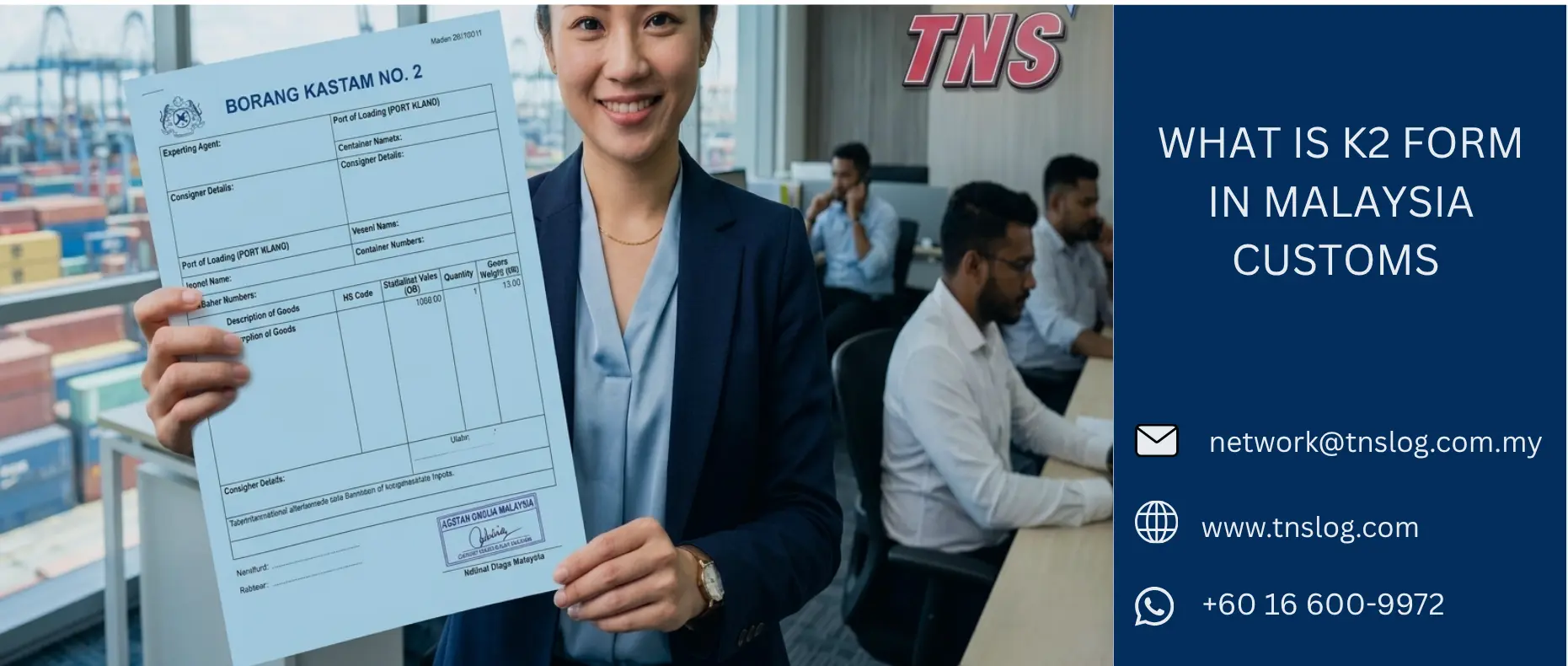
- Only a licensed customs agent can lodge your K2 export declaration — it must be validated before the cargo leaves.
- Export delays are almost never Customs. They are cut-offs: documentation, VGM and container gate-in are three separate deadlines.
- Ask your buyer which Certificate of Origin form they need before you ship, not after — it lowers the duty they pay and it is applied for after the K2.
- Some ordinary commercial goods are controlled on export, not just import. Check the permit before booking.
What you need before your first export
- A registered Malaysian company. Exports are declared under a
company, and the registration details on the declaration have to be current. - A licensed customs agent. Only a company licensed by the Royal
Malaysian Customs Department can lodge your K2. A forwarder without that licence
subcontracts the filing.
How to
verify a licensed customs agent covers what to ask. - A clear idea of your Incoterm. FOB and CIF are the common ones out
of Port Klang, and they decide how much of the journey you are quoting for.
The export process, step by step
- Confirm terms with your buyer. Incoterm, port of discharge, and
whether they need a Certificate of Origin. That last question is the one most
exporters forget to ask until it is too late. - Book the vessel. Your forwarder books space and gives you the
cut-off times: documentation cut-off, VGM cut-off, and physical container
cut-off. These are different deadlines and missing any one of them means the
next sailing. - Prepare the K2 declaration. Your agent files the export
declaration with the invoice, packing list and booking details. - Submit shipping instructions. This is what the carrier uses to
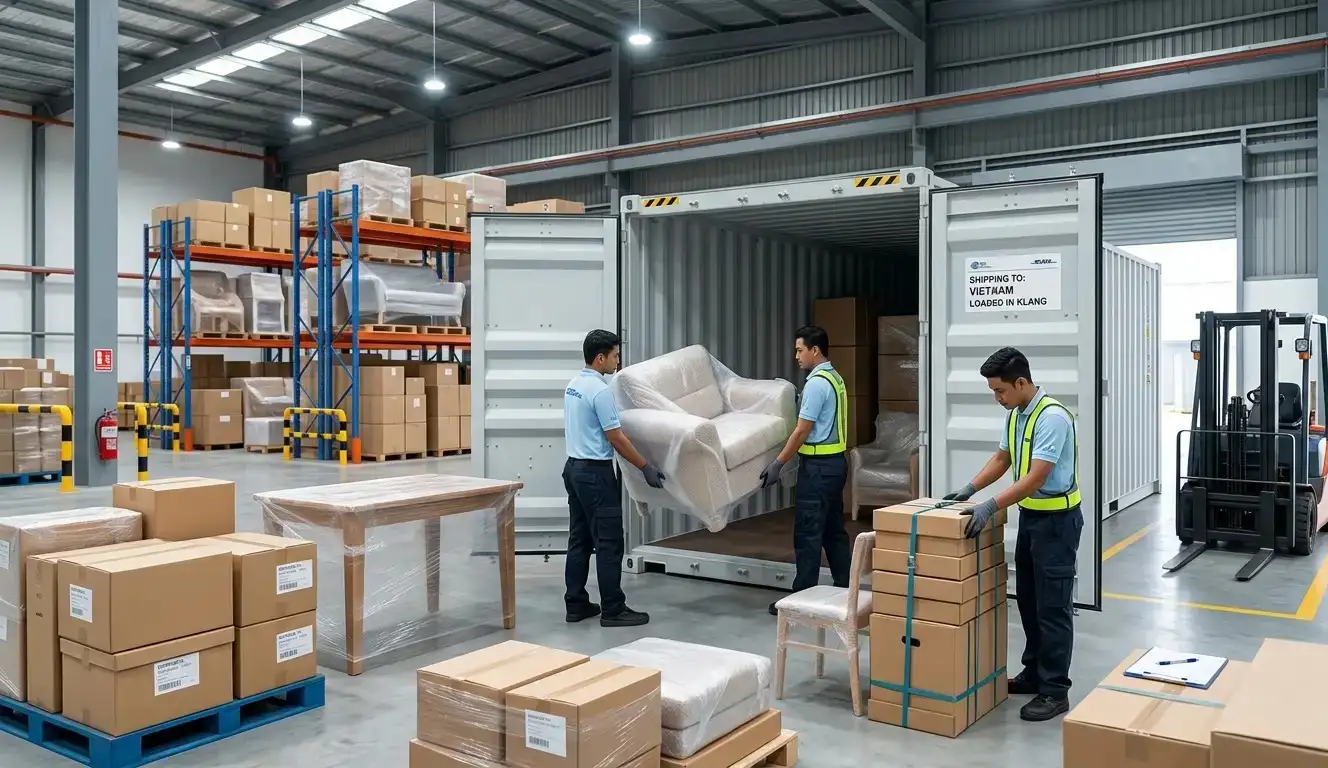
draft the bill of lading — names, addresses, cargo description, weights. - Stuff and haul the container. Either at your premises or at a
depot, then delivered to the terminal before the container cut-off. - Declare VGM. The verified gross mass has to be submitted or the
container will not be loaded. - Vessel sails, B/L is issued. You then send the document set to
your buyer — commonly through the bank if payment is by letter of credit. - Apply for the Certificate of Origin if your buyer needs one, which
is done after the export is declared.
The deadlines that actually catch people out
Export delays are rarely about Customs. They are about cut-offs:
- Documentation cut-off — usually a day or more before the vessel.
Miss it and your shipping instructions do not make the manifest. - VGM cut-off — no verified weight, no loading. This one strands
containers that are already inside the terminal. - Container cut-off — the physical gate-in deadline. Traffic,
a late stuffing crew or a haulier shortage on a peak week all eat into it. - Permit approval — if your goods are controlled, the permit has to
exist before the declaration, not after the booking.
A booking confirmation is not the deadline. The cut-offs are, and they are earlier
than most first-time exporters assume.
Certificate of Origin: why your buyer keeps asking
A Certificate of Origin proves where the goods were made. Your buyer wants it because
under a free trade agreement it can lower or remove the import duty they pay at their
end — which is real money to them, and a reason to keep buying from Malaysia rather than
somewhere else.
Two practical points. First, it is issued after the export declaration, so the
declaration has to be correct — an error there flows through into the certificate.
Second, the form depends on the destination and the agreement being claimed, so the
right question to your buyer is not “do you need a CO?” but “which form do you need?”
Documents in an export set
- Commercial invoice — description, quantity, unit value, Incoterm
and currency. - Packing list — pieces, net and gross weights, dimensions.
- Booking confirmation from the carrier or forwarder.
- Shipping instructions — what the bill of lading is drafted from.
- Export permit — for controlled goods.
- Certificate of Origin — where the buyer is claiming a preferential
rate. - Bill of lading — issued after sailing.
FCL, LCL or air
Full container (FCL) is the default once you have the volume: you control the
container, the stuffing and the seal. LCL suits smaller consignments but your cargo
shares space and schedule with other shippers, so transit is less predictable and
handling touches are higher. Air makes sense when the value-to-weight ratio justifies it
or when a deadline has already slipped.
The comparison worth making is not freight cost alone but freight plus the cost of
arriving late — a missed retail window or a stalled production line usually outweighs the
difference between a container and a pallet on a plane.
What goes wrong for first-time exporters
- The CO question came too late. Asked after shipment, it turns into
an amendment exercise. - Cut-offs treated as suggestions. Terminals do not make exceptions
for cargo that arrives after gate-in closes. - Invoice and packing list disagree. Different weights or piece
counts between documents will be queried. - Quoting CIF without knowing destination charges. You promised to
cover freight to the discharge port; whatever happens after that at the other end
still lands on someone, and your buyer will ask. - No permit check. Some ordinary commercial goods are controlled on
export, not just on import.
Tell us the destination and what you are sending. We will confirm the documents, flag any export permit, tell you the real cut-offs, and quote the freight and clearance together.
Frequently Asked Questions
What is a K2 form?
The K2 is Malaysia’s export declaration. It has to be lodged and validated before your
cargo leaves the country, and it is also the basis for a Certificate of Origin
application. More
on the K2 form.
Do I need a licence to export from Malaysia?
You need a registered company, and specific goods need an export permit from the
relevant agency. The customs licence is held by your agent, who files the declaration on
your behalf.
How early should documents reach my forwarder?
Before the documentation cut-off, which is typically a day or more ahead of the vessel.
In practice, sending the invoice and packing list as soon as the booking is confirmed
leaves room to fix anything that is queried.
Who applies for the Certificate of Origin?
The exporter applies, usually through the relevant issuing body, after the export
declaration is made. Your agent normally handles the application as part of the export
file.
What is VGM and why does it stop containers?
VGM is the verified gross mass of the packed container. It is a carrier requirement:
without a submitted VGM the container is not loaded, even if it is already sitting inside
the terminal.
Exporting through Port Klang
TNS Log Services has held its own customs agent licence since 2014 and works daily at
Westport and Northport. We book the vessel, file the K2, arrange haulage and stuffing,
and handle the Certificate of Origin as one file — so the cut-offs are tracked by the
same team that prepared the documents.
See our customs
clearance services, or
message
us on WhatsApp with your destination and cargo — we will confirm the documents,
permits and cut-offs before you book.