
goods need approval from a Malaysian government agency before they can be imported — and
the requirement follows the product, not your company. The permit has to exist
before the declaration is filed. Discovering the requirement after the container has
landed means storage and demurrage while you apply.
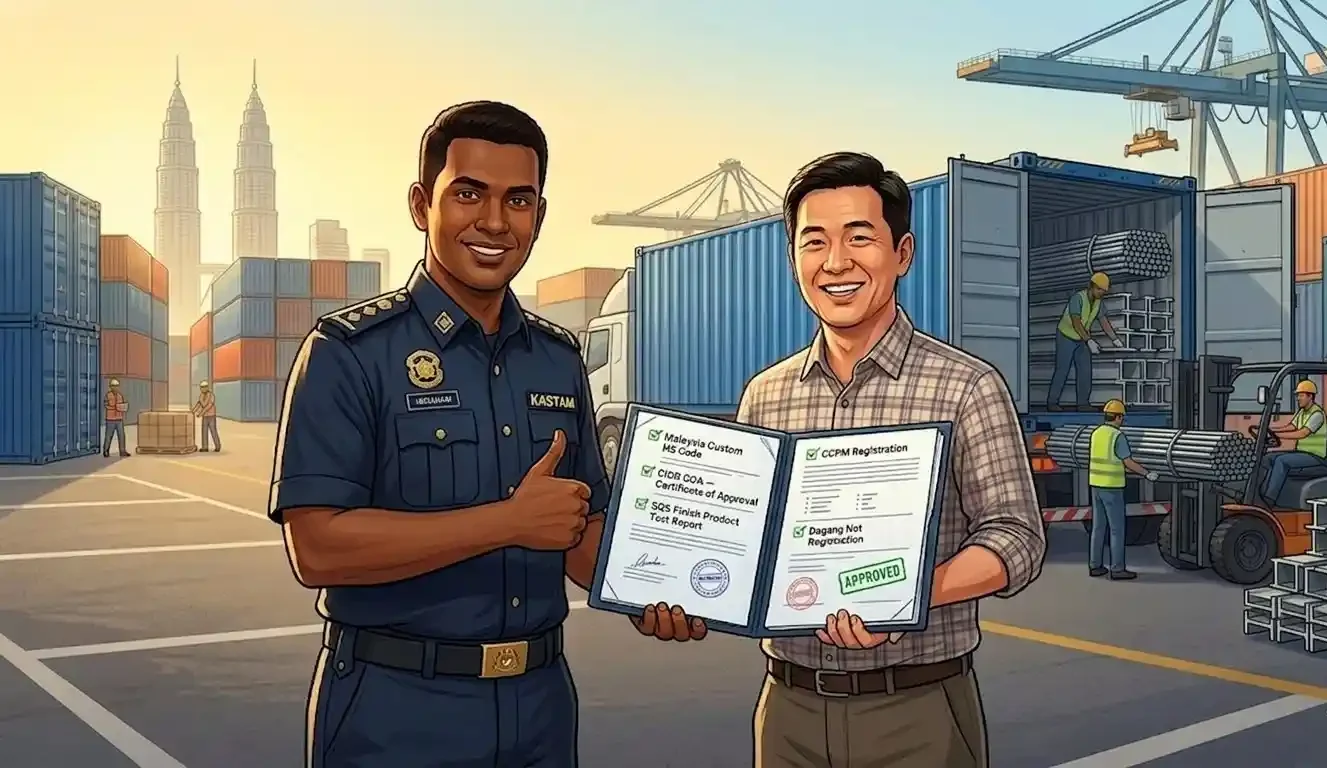
- Permit requirements follow the product, not your company — a new SKU in a familiar category can be controlled when the old one was not.
- Control lists are written against HS codes, so confirm the code before you order, not after the vessel sails.
- The right question is which agency, because that decides whether you face a form, a registration, or a testing programme.
- Cargo that lands without the approval sits at the terminal accruing storage and demurrage — and some approvals cannot be rushed.
Why this catches experienced importers too
Importers usually assume that if their last ten shipments cleared without a permit,
the eleventh will too. But permit requirements attach to the goods, not to the importer.
Change the product — a different model, a different material, an accessory bundled into
the same carton — and a control that never applied before can apply now.
The pattern we see most often is not an exotic product. It is a company that has been
importing the same category for years, adds one new line, and finds out at the port that
the new line is controlled.
How to find out whether your goods are controlled
- Start with the HS code, not the product name. Control lists are
written against tariff codes. Two products that look similar can sit under
different codes with different rules. - Confirm the code before you order. Your supplier’s code is for
their export, not your import. Getting a second opinion costs nothing at this
stage. - Ask which agency, not just whether. “Do I need a permit?” gets a
yes or no. “Which agency controls this code, and what do they require?” gets you
something you can act on. - Check lead time early. Some approvals are quick. Others involve
product registration, testing or certification that takes weeks — and no amount of
urgency at the port shortens them.
The agencies you are most likely to meet
Control in Malaysia is spread across agencies rather than sitting in one place. The
ones commercial importers encounter most often include standards and certification bodies
for electrical and electronic products, the communications regulator for radio and
telecom equipment, health authorities for pharmaceuticals, medical devices and food,
quarantine authorities for plants, animals and agricultural products, the construction
industry board for certain building materials, and the environment department for
scheduled wastes and controlled chemicals.
That list is not exhaustive and it is not the point. The point is that
“which agency” is the first question, because it determines whether you
are looking at a form, a registration, or a testing programme.
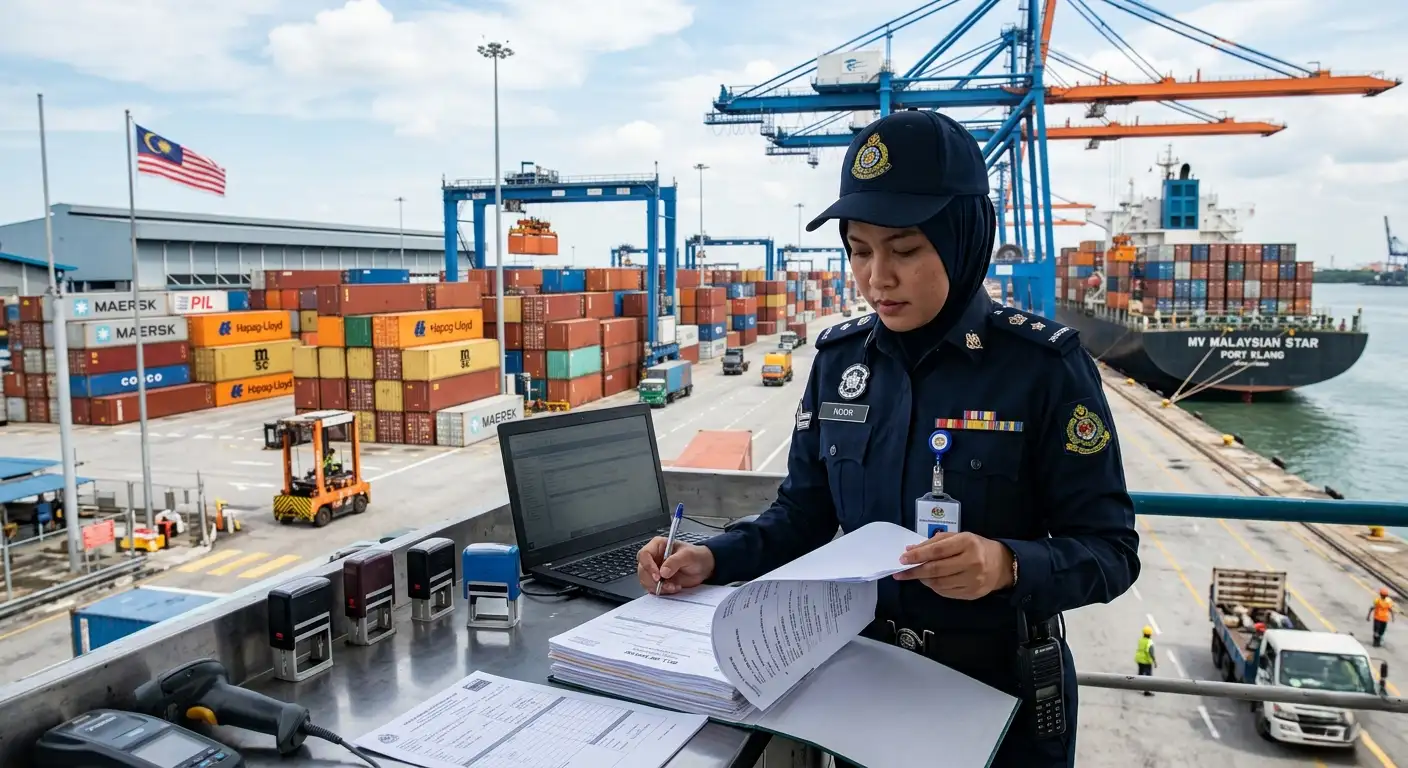
Where the permit sits in the timeline
- You confirm the HS code and check whether it is controlled — before ordering.
- If controlled, the permit or approval is applied for and obtained.
- Supplier ships; documents go to your customs agent.
- The declaration is filed referencing the approval.
- Cargo is assessed and released.
Notice that step 1 sits before the purchase order, not before the vessel arrives. That
is the single biggest difference between importers who clear smoothly and importers who
pay storage.
What it costs to get this wrong
- Storage and demurrage. The container sits at the terminal while you
apply. Free time runs from discharge regardless of your paperwork. - An application that cannot be rushed. Where approval requires
testing or registration, the timeline is set by the agency. - Goods that cannot be imported at all. Some items are prohibited
outright, or require an approval your company is not eligible for — in which case
the options are re-export or abandonment, both expensive. - Penalties. Declaring controlled goods without the required approval
is a compliance issue, not a clerical one.
Practical habits that prevent all of this
- Send your agent the product, not the code. A photo, a spec sheet
and the intended use tell a licensed agent far more than a code copied from a
supplier’s invoice. - Treat new SKUs as new imports. Re-check any product line you have
not shipped before, even within a familiar category. - Ask before the purchase order, not before the vessel. The cost of
checking early is a phone call. - Keep approvals with the shipment file so the declaration references
the right document the first time.
Send us a photo or spec sheet and where you are importing from. We will confirm the HS code and tell you whether any approval is needed — while the goods are still at your supplier.
Frequently Asked Questions
How do I know if my goods need an import permit in Malaysia?
It depends on the HS code, not the product description. Confirm the code first, then
check that code against the relevant control list — which is what a licensed
customs agent does as part of preparing your declaration.
Who issues import permits?
Different agencies control different categories — standards bodies, health
authorities, quarantine, communications, construction and environment among them. Which
one applies is determined by the goods.
How long does it take to get one?
Anywhere from days to several weeks. Where the approval involves product registration,
testing or certification, the timeline belongs to the agency and cannot be accelerated by
the cargo already being at the port.
What happens if my cargo arrives without the permit?
It stays at the terminal until the approval is in place, accruing storage and
demurrage. In some cases the goods have to be re-exported.
Does an Approved Permit (AP) apply to my shipment?
APs apply to specific categories, most commonly vehicles. Most commercial goods that
are controlled require an agency approval rather than an AP — but which one applies
still comes back to the tariff code.
Check before you order, not after it lands
TNS Log Services has held its own customs agent licence since 2014 and files
declarations daily at Port Klang. Tell us what you intend to import — the actual
product, in plain language — and we will confirm the classification and whether any
approval is needed while the goods are still at your supplier.
See the full import
process, or
message
us on WhatsApp with a photo or spec sheet — we will tell you before you place
the order.