
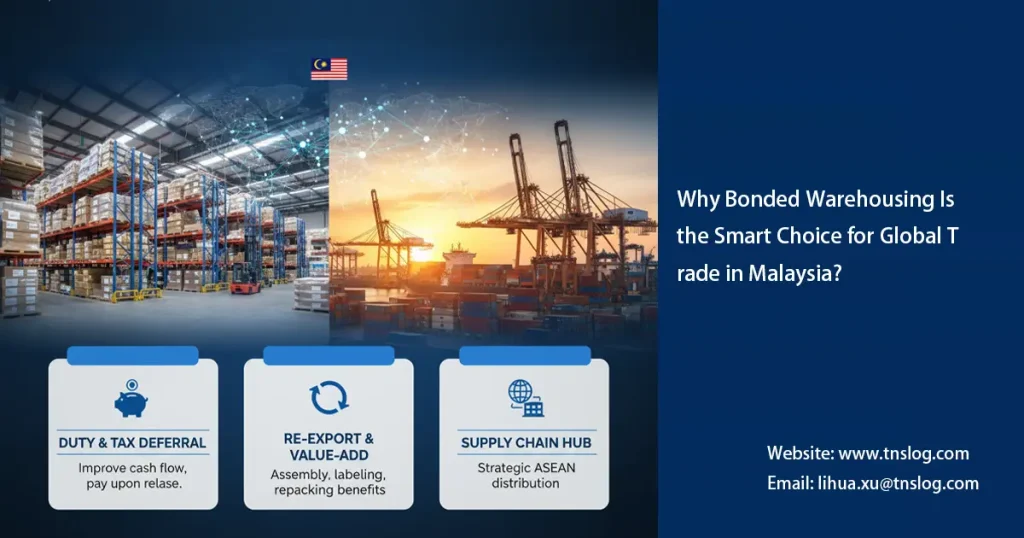
Quick answer: Bonded warehousing in Malaysia allows goods to be stored under customs supervision at places like Port Klang without immediate duty payments, deferring taxes until entry into the local market or re-exportation. This flexibility reduces costs and leverages the geographical advantage of Malaysia's ports.
Frequently Asked Questions
What is bonded warehousing in Malaysia?
Bonded warehousing involves storing goods under customs control at locations like Port Klang, deferring duties until they enter the local market or are re-exported.
How long can goods stay in a bonded warehouse at Port Klang?
Goods can remain in a bonded warehouse indefinitely; duties are only paid when goods enter the local market or get transshipped.
Why choose bonded over standard warehousing?
Bonded warehousing defers tax payments, which improves cash flow and suits high-duty items like machinery. Standard warehouses require upfront tax payments.
What documents are needed for bonded warehousing?
You'll need the K1 declaration, Bill of Lading, and necessary customs paperwork through systems like Dagang Net National Single Window.
Can bonded warehouses support transshipment?
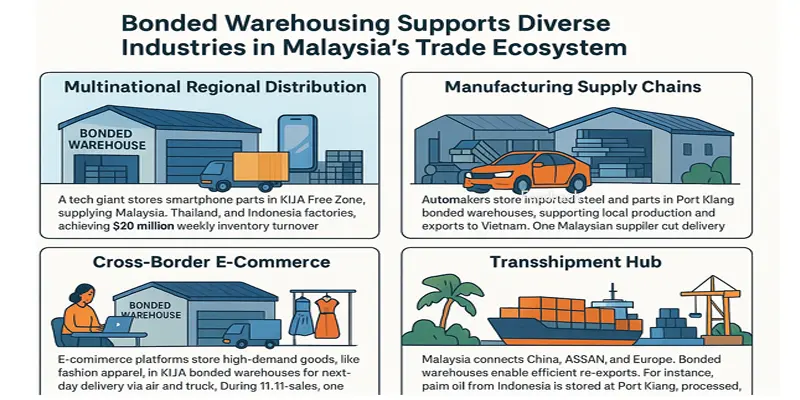
Yes, bonded warehouses in Malaysia support tax-free transshipment, allowing goods to move through Malaysia to another destination without local duties.