Call Our Sales
Albee012-713 9629 Wenxin012-952 9629 Kai012-831 9629 Umi012-247 9629 Mei012-236 9629

Quick answer: ASEAN Free Trade offers businesses in Malaysia significant benefits like reduced tariffs through CEPT, faster customs clearance at Port Klang, and cost-effective transshipment using Port Klang Free Zone. Be prepared for challenges like navigating AFTA's complex rules and ensuring accurate Form D submissions.
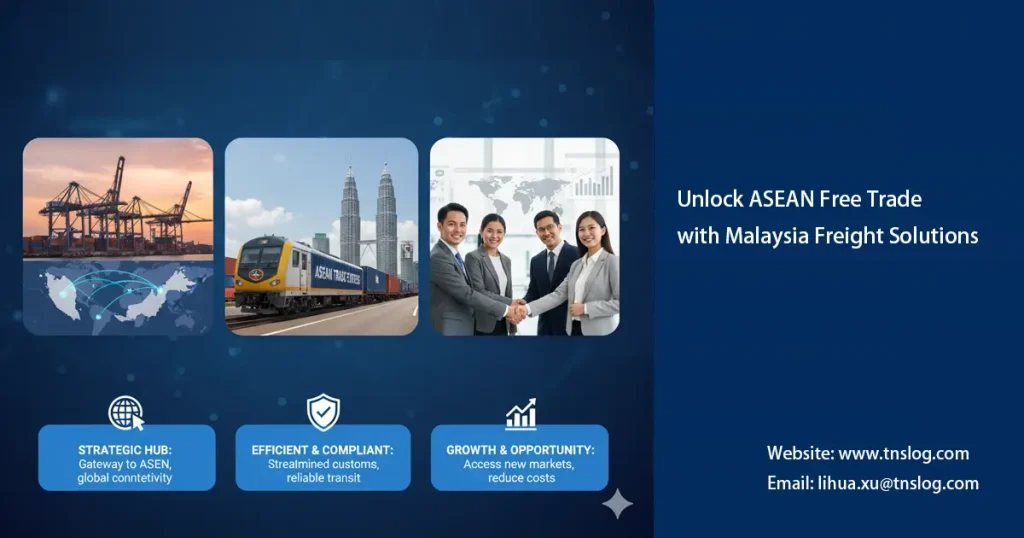
Unlock ASEAN Free Trade with Malaysia Freight Solutions

The ASEAN Free Trade Area (AFTA), launched in 1992, promotes free trade among ASEAN nations. It reduces tariffs, standardizes trade rules, and fosters regional supply chain collaboration. AFTA includes ten countries: Malaysia, Singapore, Thailand, Indonesia, Philippines, Vietnam, Cambodia, Laos, Myanmar, and Brunei.

In Malaysia, a key trade hub, AFTA helps businesses reach 650 million consumers. For example, Malaysian electronics exporters ship to Vietnam with low tariffs, simplifying cross-border trade.

Freight forwarding Philippines from Malaysia

Unlock ASEAN Free Trade with Malaysia Freight Solutions

Key Benefits of AFTA for Businesses

AFTA offers clear advantages for businesses, especially those using Malaysia’s logistics infrastructure:

  • Lower Tariff Costs: AFTA’s Common Effective Preferential Tariff (CEPT) cuts tariffs to 0-5%. This reduces import and export costs. For instance, Malaysian palm oil exporters save up to 5% on duties to Indonesia, worth millions annually. SMEs can market textiles to Thailand or Philippines more competitively.
  • Faster Trade Flow: Unified trade rules speed up customs clearance. At Port Klang, AFTA-standardized documents cut clearance time from 5 to 3 days, saving 20%. This benefits time-sensitive goods like electronics or fresh produce.
  • Stronger Market Competitiveness: Low tariffs and quick delivery boost market edge. A Malaysian electronics supplier delivers to Thailand 2-3 days faster than non-AFTA competitors, securing more orders.
  • Malaysia as a Transshipment Hub: Malaysia’s ports, like Port Klang and Penang, excel as transshipment hubs. AFTA’s tax exemptions allow goods to be stored and re-exported. For example, Chinese consumer goods stored at Port Klang Free Zone are re-exported to Singapore, saving 10-15% in logistics costs.
  • Supply Chain Integration: AFTA supports regional production networks. Malaysian auto parts makers import Thai raw materials cheaply, process them, and export to Vietnam. This cuts production costs by 8-12%.

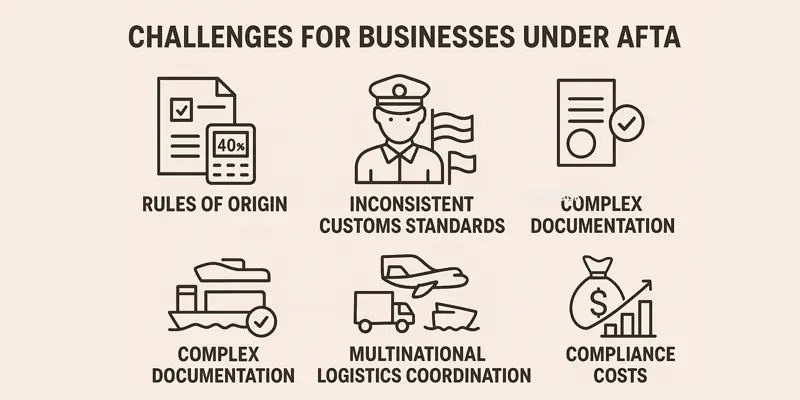
Challenges for Businesses Under AFTA

Challenges for Businesses Under AFTA

AFTA’s benefits come with complexities that businesses must address:

  • Complex Rules of Origin (ROO): Goods need 40% local content to qualify for tariff cuts. Calculating this requires detailed records. Errors can lead to rejected benefits. For example, a Malaysian textile exporter lost $100,000 in tariff savings to Indonesia due to ROO mistakes.


  • Inconsistent Customs Standards: ASEAN countries have varied customs rules. Indonesia requires extra import licenses, unlike Malaysia’s streamlined AEO process. This causes compliance issues and delays.


  • Complex Documentation: AFTA’s Form D certificate demands precise details and multi-party verification (producers, exporters, customs). Errors are costly. A Malaysian food exporter’s Form D mistake delayed goods in Vietnam for a week.


  • Multinational Logistics Coordination: Cross-ASEAN transport involves multiple providers, risking delays. Shipping from Malaysia to Cambodia via sea and land can add 2-3 days if poorly coordinated.


  • Compliance Costs and Risks: Meeting AFTA rules requires training or expert hires. SMEs may struggle, facing 5-10% higher operating costs due to regulatory complexity.

How Our Services Help You Thrive Under AFTA

As a leading Malaysian freight forwarder, we offer tailored solutions to maximize AFTA benefits and overcome challenges:

  • Expert Customs Clearance: We prepare and submit Form D for tariff exemptions. Our team ensures ROO compliance. For example, we secured 0% tariffs for a Malaysian electronics exporter to Thailand, saving 15% on costs.
  • Efficient Transshipment: Using Port Klang and KLIA Free Zone bonded warehouses, we support regional distribution. Goods from China stored at Port Klang are re-exported to Singapore tax-free, cutting costs by 10-15%.
  • ASEAN-Wide Transport Network: Our Land, Sea, and Air services cover key ASEAN countries. We ensure seamless delivery from Malaysia to Vietnam or Indonesia with real-time tracking.
  • Compliance and Consulting: We guide clients on AFTA rules and local customs differences. We saved an SME $20,000 by avoiding Indonesia clearance penalties.
  • Supply Chain Optimization: Combining bonded warehousing and multimodal transport, we streamline logistics. We cut a textile supplier’s Malaysia-to-Cambodia delivery time by 25% and costs by 12%.

Conclusion

The ASEAN Free Trade Area opens a 650-million-consumer market with low tariffs, fast trade, and integrated supply chains. Its complexities demand expert logistics support. As a Malaysian freight forwarder, we simplify customs and optimize transport to unlock AFTA’s potential.

Frequently Asked Questions

What are the tariff benefits of AFTA for Malaysian businesses?

AFTA's CEPT program reduces tariffs to 0-5%, allowing Malaysian palm oil exporters to save up to 5% in duty costs, particularly when shipping to Indonesia.

How does AFTA improve trade flow for Malaysian shippers?

Unified trade rules under AFTA expedite customs clearance, reducing time at Port Klang from 5 to 3 days, significantly benefiting time-sensitive shipments like electronics.

What are common challenges when shipping under AFTA from Malaysia?

Businesses face challenges such as complex ROO calculations, consistent customs standards across ASEAN, and detailed Form D documentation, which must be exact to avoid delays.

How can Malaysian businesses optimize transshipment through AFTA?

Utilizing Port Klang and Penang as transshipment hubs takes advantage of AFTA’s tax exemptions, allowing goods to be stored and re-exported with 10-15% savings in logistics costs.

What is the importance of Form D in AFTA trade for Malaysia?

Form D is crucial for tariff exemptions, demanding accurate completion and multi-party verification. Errors can lead to significant shipment delays, as seen with a Malaysian food exporter in Vietnam.

Have Anything To Ask Us?

Please fill in your email in the form and we’ll get back to assist you soon!

Items marked with * are mandatory