
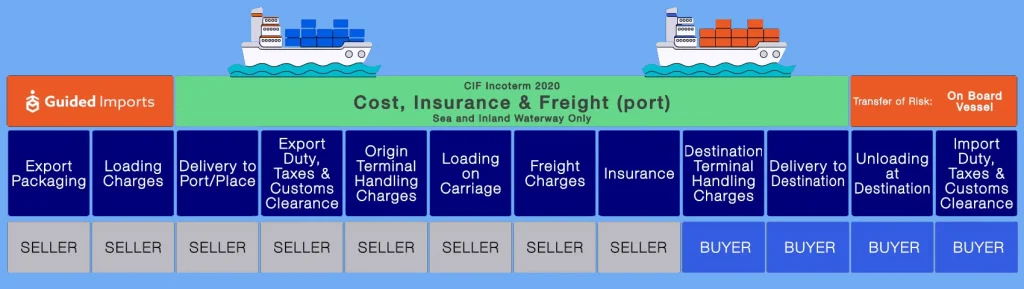
Quick answer: CIF (Cost, Insurance, and Freight) means the seller pays ocean freight and minimum cargo insurance to the named destination port, but risk passes to the buyer the moment goods are loaded onto the vessel at the origin port. For Malaysian exporters shipping out of Port Klang — via Westport or Northport — the seller handles export clearance, the K1 declaration, and freight to the buyer's port, then hands over the bill of lading and insurance certificate. The buyer takes over from the destination port: unloading, import duties, and inland delivery are their cost and responsibility.


Frequently Asked Questions
Under CIF, who files the K1 declaration at Port Klang — the seller or the buyer?
The Malaysian seller files the export K1 declaration through the SMK system via Dagang Net National Single Window before the vessel sails. The buyer handles import clearance and duties at their destination port. Both sides carry separate customs obligations, and CIF does not change that split.
Does CIF cover the full cargo value if goods are damaged during transit to Europe or China?
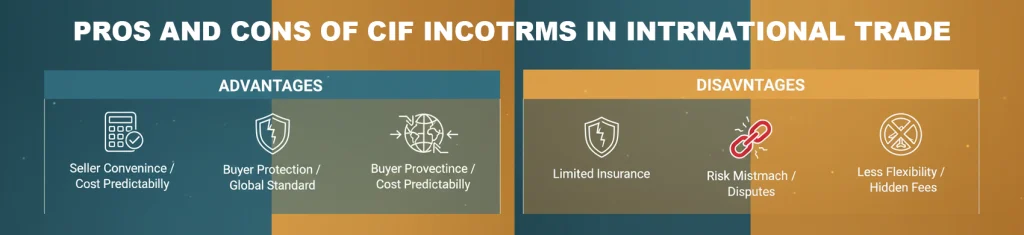
No. CIF insurance is minimum coverage — typically 110% of the invoice value under Institute Cargo Clauses (C), which excludes many common risks like theft or improper handling. Buyers shipping high-value or fragile cargo from Port Klang should arrange their own all-risk marine insurance on top of what the seller provides.
When does risk transfer under CIF for a shipment leaving Westport, Port Klang?
Risk transfers the moment goods are loaded on board the vessel at Westport. If damage occurs on the wharf before loading, the seller is liable. Once the goods cross the ship's rail, any loss or damage during the ocean leg is the buyer's risk, even though the seller paid the freight.
Can I use CIF for LCL cargo or does it only apply to FCL shipments?
CIF applies to both FCL and LCL shipments. For LCL out of Port Klang, the seller arranges cargo consolidation at a Container Freight Station, pays ocean freight to the destination port, and provides a house bill of lading. The same risk-transfer rule applies — risk passes on loading, not on delivery.
What documents must a Malaysian CIF seller hand to the buyer to complete the transaction?
The seller must provide: a commercial invoice, a negotiable bill of lading, and an insurance certificate or policy covering at least 110% of the invoice value. These three documents are the core set. Additional papers — packing list, certificate of origin, HS code classification — are typically required by the buyer's customs authority and should be agreed in the sales contract.