The history of FTAs can be traced back to regional economic integration movements in the mid-20th century, such as the European Economic Community (the predecessor of the European Union). Today, there are over 300 FTAs in operation worldwide, covering not only traditional manufacturing but also areas such as digital trade, intellectual property, and sustainable development. For export-dependent economies like Malaysia, FTAs can streamline the entire supply chain, from raw material imports to finished product exports. For example, an electronics manufacturer can exempt Japanese components from tariffs of up to 10%, effectively converting costs into profit margins.
But FTAs are not a panacea. Businesses should be aware of the “negative list” in the agreement, which means that certain sensitive sectors (such as agriculture or defense) remain protected. Furthermore, compliance with rules of origin is crucial: products must meet a certain local content ratio (e.g., 40% local value added) to qualify for tariff reductions. This requires companies to plan their supply chains in advance to avoid delays caused by late-stage remediation efforts.
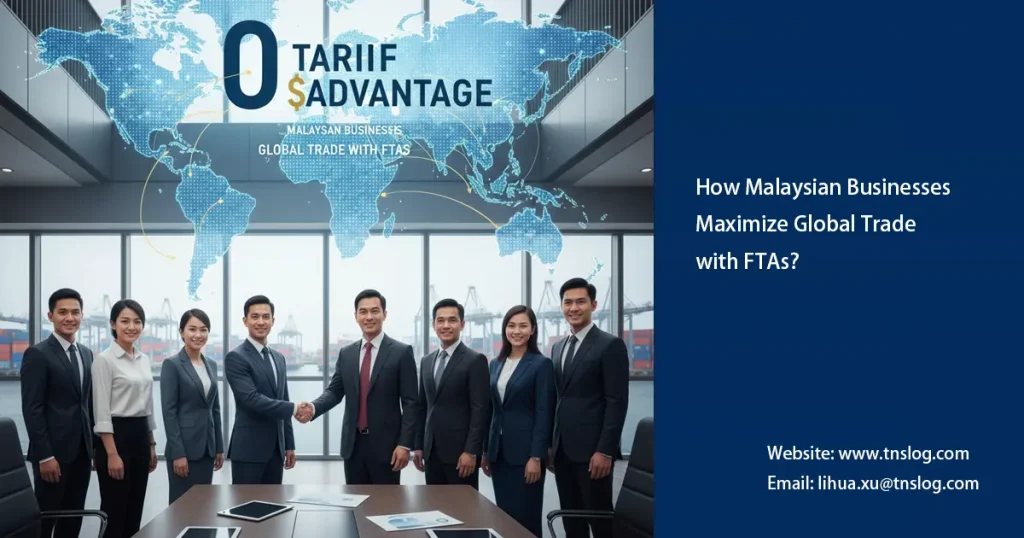
Malaysia actively participates in the network of multilateral and bilateral FTAs. As of 2025, it has signed approximately 18 agreements, covering approximately 70% of Malaysia’s total trade. These agreements not only connect traditional partners such as China and Japan, but also extend to emerging markets such as Pakistan and the European Free Trade Association (EFTA). The following is a brief overview of key FTAs to help you quickly identify potential opportunities:
These agreements are managed by the Malaysian Ministry of International Trade and Industry (MITI), and businesses can apply for certificates through its FTA portal. For example, the implementation of the RCEP has helped Malaysian SMEs save an average of 5% in logistics costs when exporting to the Chinese market, while the EFTA agreement has opened the door to high-end manufacturing in Europe.
The core value of the FTA lies in reducing trade friction, but its practical impact on Malaysian businesses goes far beyond this. Research shows that participating companies can achieve an average export growth rate of 12%, particularly in supply chain-intensive industries such as electronics, palm oil, and textiles. The following are specific benefits for the logistics and freight sectors:
FTAs often include electronic customs clearance systems and mutual recognition agreements (such as customs cooperation) to reduce human error. FedEx analysis indicates that this can reduce supply chain disruptions by 30%. For small and medium-sized enterprises, this means they no longer need to hire expensive legal counsel to handle complex declarations of origin—they only need to prepare Form E (within ASEAN) or Form AK (in the CPTPP).
Free trade agreements are more than just policy instruments; they serve as a bridge for Malaysian businesses to enter the global arena. By reducing costs, enhancing resilience, and streamlining processes, FTAs have helped countless small and medium-sized enterprises transform from regional players to global competitors. Whether you’re exploring overseas markets for the first time or optimizing existing supply chains, we recommend starting with MITI’s resources and gradually building your FTA strategy.