
Quick answer: Malaysia has eight major ports, with Port Klang ranked 12th globally at 13.8 million TEUs and Port Tanjung Pelepas (PTP) ranked 16th at 10.5 million TEUs in the 2024 CEOWORLD World Port Rankings. Both sit along the Strait of Malacca, making them primary transshipment hubs connecting Asia, Europe, and the Middle East. Penang Port ranks 83rd worldwide at 1.2 million TEUs.


Understanding General Average in Marine Insurance
Quick answer: General Average (GA) is a maritime principle where all parties in a voyage — shipowner, cargo owners, and insurers — share proportionally in

Logistics Expert In Furnitures Export From Malaysia
Quick answer: Exporting furniture from Malaysia is streamlined with TNS LOG’s sea and air freight services from Port Klang. With 10 years in the industry,
What Is DDP Shipping? – Delivery Duty Paid
Quick answer: DDP shipping means the seller handles all customs duties, taxes, and logistics from Malaysia to the buyer’s destination. This includes everything from export
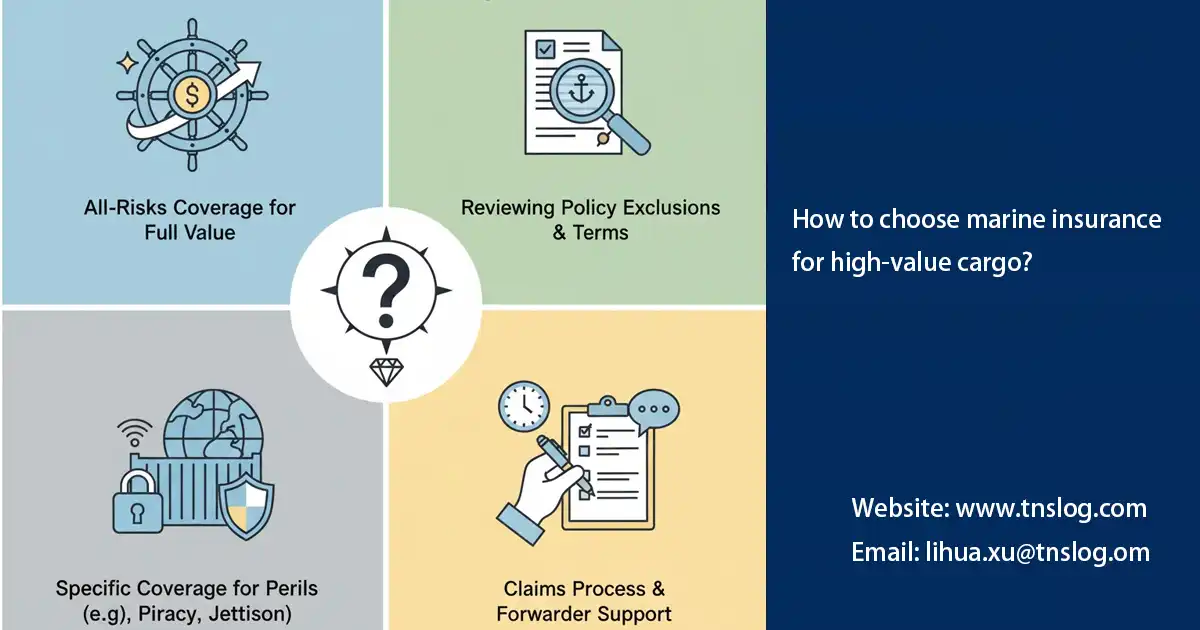
Marine Insurance for High-Value Cargo
Quick answer: Selecting marine insurance for high-value cargo involves choosing ICC (A) all-risk insurance for comprehensive coverage and ensuring the insured value reflects Malaysia-specific costs
Frequently Asked Questions
Which Malaysian port should I use for FCL shipments to Europe?
Port Klang is the default choice — ranked 12th globally with 13.8 million TEUs handled annually. Westport and Northport both handle FCL direct services to major European hubs. PTP in Johor is the strong alternative, especially if your cargo originates in southern Peninsular Malaysia.
What is the difference between Port Klang and Port Tanjung Pelepas for transshipment?
Port Klang (12th globally) serves a wider range of direct calls and is the main gateway for Malaysian imports and exports. PTP (16th globally) operates primarily as a transshipment hub. If your cargo needs onward connection to smaller regional ports, PTP's feeder network is well-established.
How long is the free-storage period at Port Klang before demurrage starts?
Free storage at Westport and Northport is typically three to five days after container discharge, depending on your shipping line's terms. After that, demurrage accumulates daily. Confirm the exact window on your Bill of Lading before the vessel arrives — missing this is the most common cost blowout on Port Klang shipments.
Do I need to file a K1 declaration for imports arriving through Port Klang?
Yes. All dutiable imports require a K1 customs declaration submitted through the Dagang Net National Single Window and processed via the SMK system. Pre-Arrival Processing (PAP) lets you submit before the vessel berths, which shortens clearance to one to three working days if your HS code and invoice values are correct from the start.
Can I consolidate LCL cargo from multiple Malaysian ports into one shipment?
Yes. Cargo consolidation is standard for LCL. A forwarder at Port Klang can consolidate cargo from Penang Port or Kuantan Port into a single FCL before the overseas leg. This reduces per-unit freight cost but adds inland haulage time — factor in two to four extra days for consolidation and stuffing at the Port Klang container freight station.