Marine Insurance vs Carrier Liability: Key Differences

As a Malaysia-based freight forwarder serving exporters and importers across the globe, we often encounter clients struggling to understand whether carrier liability is sufficient protection—or if marine insurance is a necessity. This article breaks down the key differences between the two from both a practical and legal standpoint, helping shippers and consignees identify which type of protection best fits their needs, and how to apply these principles in real-world shipping scenarios.

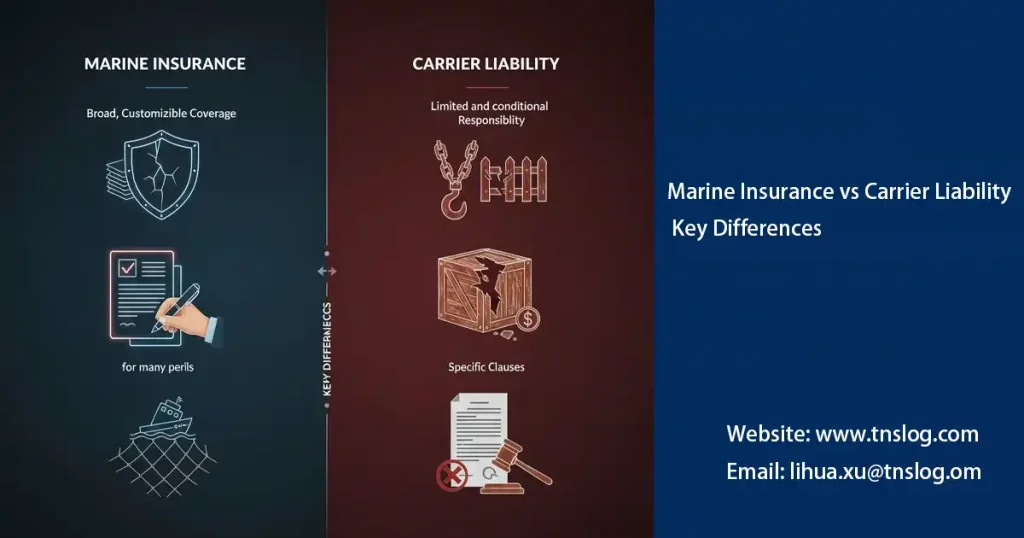
Marine Insurance vs Carrier Liability

Definition of Carrier Liability

Carrier liability refers to the legal responsibility of a carrier (shipping line, airline, or their agent) for loss or damage to cargo that occurs during transportation. The scope and extent of this liability are typically defined by the Bill of Lading (B/L), Air Waybill (AWB), and applicable international conventions such as the Hague-Visby Rules, Hamburg Rules, or contractual terms between the carrier and shipper.

Key points:

  • The carrier’s responsibility is limited by law or contract; most Bills of Lading include liability caps (e.g., per package, per kilogram, or per shipping unit).
  • Carriers are generally liable for losses caused by their own negligence or failure to exercise due diligence, but may be exempt from responsibility in cases such as act of God, inadequate packaging, or inherent vice.
  • Carrier liability is reactive—it applies after a loss occurs and requires the shipper to prove negligence or fault.


Practical tip: Always review the carrier’s terms on the Bill of Lading, especially sections related to liability limits and exclusions, and evaluate whether you need marine insurance to fill any protection gaps.

Scope of Marine Insurance

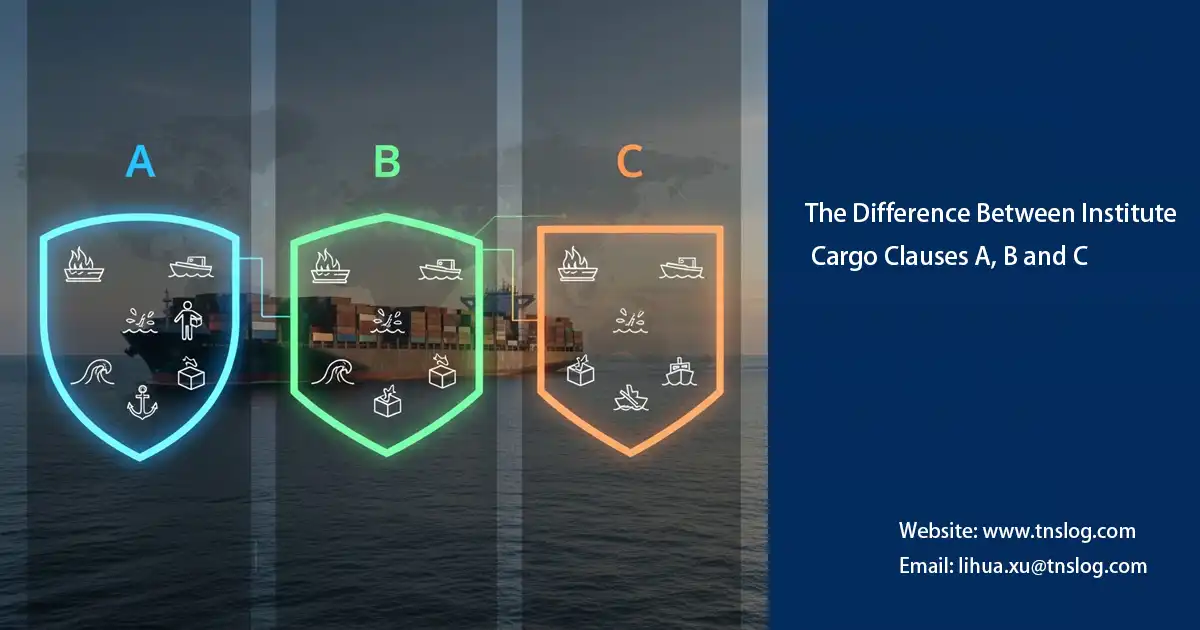
Marine insurance is a proactive form of financial protection that covers loss or damage to cargo during transit—whether by sea, air, or land. The scope of coverage depends on the policy type, commonly classified under Institute Cargo Clauses (ICC) as ICC (A), ICC (B), or ICC (C).

  • ICC (A) = All Risks (broadest coverage)
  • ICC (B) = Named Risks (moderate coverage)
  • ICC (C) = Basic Risks (limited coverage)

Key points:

  • Marine insurance is a voluntary contract that transfers the transportation risk from the cargo owner to the insurer.
  • It covers a wide range of perils—total loss, partial loss, theft, fire, collision, and natural disasters. Some policies can be extended to include inland transit or warehousing.
  • Insurance compensation is contract-based—as long as the loss falls within the policy coverage and proper documentation is provided, the insurer must pay. There’s no need to prove the carrier’s fault.
  • Typical coverage amount = Invoice value + freight + expected profit, with optional deductibles or specific exclusions (e.g., war, strikes).


Practical tip: Align your insurance value with the shipment’s total exposure—cargo cost, freight, and profit—to ensure full coverage.  Learn more in our article How Marine Cargo Insurance Works in International Trade

Situations Where Each Applies

When Carrier Liability Applies

  • When loss or damage is caused by carrier negligence, such as mishandling, improper loading/unloading, or equipment failure.
  • When there is no insurance policy and the loss occurs within the carrier’s legal responsibility period (typically “tackle-to-tackle” in ocean freight).
  • When the cause of loss is directly attributable to the carrier, and sufficient evidence can be provided.

Limitations:

  • Liability is often capped by international conventions (e.g., limited to a few dollars per kilogram).
  • Exclusions such as bad weather, poor packaging, or inherent defects can prevent successful claims.
  • The burden of proof is on the claimant—making it a lengthy, complex process.

When Marine Insurance Applies

  • When comprehensive protection is desired, including cases where the carrier is not liable (force majeure, theft, natural disaster, etc.).
  • For high-value cargo where the carrier’s maximum liability limit is insufficient.
  • For multi-modal shipments where risks extend beyond the carrier’s direct custody period.
  • When you want a single point of claim—with the insurer handling subrogation against the carrier.

Recommendation: In most cases, marine insurance provides far more reliable and complete protection. Carrier liability should be viewed as a supplemental or secondary recourse—not a substitute. For comparison between insurance types, see Overview of Main Types of Marine Cargo Insurance.

Legal Implications for Exporters and Importers

Who Buys Insurance — Depends on Incoterms

  • CIF / CIP: The seller is responsible for purchasing insurance, though only the minimum required coverage (usually ICC C). Buyers should request higher coverage if needed.

  • FOB / EXW: The buyer bears the risk after the goods are loaded; therefore, the buyer must arrange insurance.

Best practices:

  1. Define insurance obligations in the contract — specify insurance clause, minimum coverage (e.g., ICC A, insured value = 110% of cargo value), and responsible party.

  2. Check Bill of Lading clauses — especially for multimodal or transshipment routes where responsibility shifts between carriers.

  3. Verify insurance policy details — ensure coverage scope, deductible, insured value, claim procedures, and survey requirements are clearly stated.

Claim Procedures and Legal Considerations

  • Both carrier and insurer claims must be filed within specific deadlines, with written notice and documented evidence.

  • Common claim documents include: Bill of Lading, commercial invoice, packing list, insurance certificate, survey report, photos, repair invoices, and loss statements.

  • If you claim under insurance first, the insurer may later pursue the carrier under subrogation, saving you time and complexity.

Legal reminder: Jurisdiction for maritime claims may vary (Hague Rules, Hague-Visby, Hamburg Rules, etc.). For complex international disputes, consult a maritime law expert or rely on your freight forwarder/insurance broker for coordination.

Practical Checklist for Exporters and Importers

Before shipment:

  • Clarify insurance responsibilities and policy terms in the sales contract.
  • If the seller provides insurance, request a copy of the policy and insurer’s contact details.

During shipment:

  • Verify Bill of Lading terms and note any liability limitations.
  • Document the loading and packaging process with photos.

Upon arrival:

  • Inspect goods immediately upon receipt; note visible damages on delivery receipts.
  • Contact your freight forwarder and insurance agent promptly if loss or damage is detected.

Claim documentation checklist:

  • Commercial invoice, packing list, Bill of Lading, insurance policy, survey report, photos, repair/loss invoices, and communication records.

Claim procedure:

  • Notify both the carrier and insurer in writing as soon as possible.
  • If the insurer compensates you, provide required documents for subrogation.

Conclusion: Which Protects You Better?

For high-value shipments, multi-leg transportation, or goods with high profit margins, marine insurance is essential. Carrier liability serves only as a limited fallback mechanism, often subject to numerous exclusions and compensation caps.

Marine insurance provides faster, more reliable, and broader coverage, ensuring your business continuity even when unforeseen incidents occur.

Have Anything To Ask Us?

Please fill in your email in the form and we’ll get back to assist you soon!

Items marked with * are mandatory