
Quick answer: LCL (Less than Container Load) at Port Klang means your cargo shares a container with other shippers, so you pay for the space you use rather than a whole box. TNS Log Services has booked LCL out of Malaysia as a licensed freight forwarder since 2014 and consolidates cargo at its own warehouse in Klang, minutes from both Westport and Northport. LCL is normally the cheaper option below roughly 13–15 CBM; above that a 20-foot FCL usually wins once CFS handling charges are counted. Minimum booking is 1 CBM, B2B shipments only, with the K1 export declaration filed in-house through uCustoms.
💬 WhatsApp us for a quoteRequest a quote →
1. What LCL Shipping Means at Port Klang
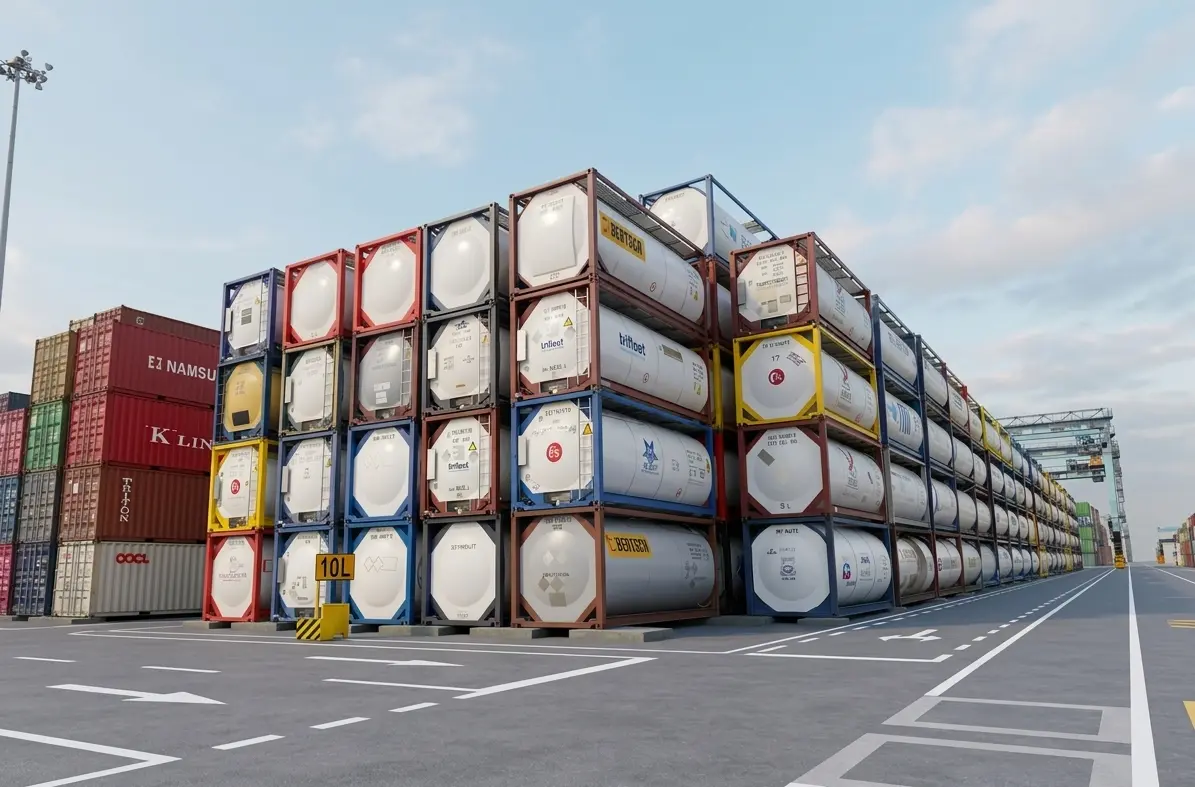
LCL — Less than Container Load — is for cargo that does not fill a container on its own. Your goods are consolidated with other shippers’ cargo into one container at a Container Freight Station (CFS), shipped, then de-consolidated at destination. You are billed on chargeable volume rather than for a whole container.
Port Klang handles over 13.8 million TEUs a year across Westport and Northport, which is why consolidation services out of Klang run frequently to most major trade lanes. Westport carries the denser sailing schedule; Penang Port can be the better option for northern-region cargo once inland trucking is priced in.
How LCL Is Charged
LCL is charged on whichever is greater — cubic metres or weight in tonnes. That is the weight-or-measure (W/M) basis. Dense cargo such as machinery parts is usually charged on weight; light bulky cargo such as packaging or furniture is charged on volume. Quoting only the ocean freight line is what causes surprise invoices: CFS handling, documentation and destination charges sit on top, and on LCL they are proportionally larger than on FCL.
When LCL Stops Being the Cheaper Choice
Below roughly 13–15 CBM, LCL is normally cheaper out of Port Klang. Above that, a 20-foot FCL is usually more cost-effective once CFS handling charges on the LCL side are included, and it is faster because the container is not waiting for other cargo to fill it. Compare full landed cost, not the freight line alone.

2. LCL Freight Forwarder Port Klang — What TNS Log Provides
TNS Log LCL Consolidation at Its Own Klang Warehouse
TNS Log Services consolidates LCL cargo at its own warehouse in Klang rather than handing the cargo to a third-party CFS and losing sight of it. Cargo is received, measured, stuffed and manifested in-house, and the same team files the export declaration as a licensed customs agent. Minimum booking is 1 CBM and the service is for B2B shipments.
Export Declaration Filed In-House
The K1 export declaration is filed in-house through uCustoms rather than subcontracted, and RMCD inspection is coordinated directly when a consignment is called up. On consolidated cargo this matters more than on FCL: one incorrect HS code or a mismatched description on a single shipment inside the container can hold the whole consolidation.
Why Being at Port Klang Matters on Consolidated Cargo
TNS Log is physically on the ground at Westport and Northport every working day, with the office in Klang minutes from both terminals. When a consolidation needs a re-measure at the CFS, when RMCD calls a box for physical inspection, or when a decision has to be made at the wharf, a forwarder handling it remotely cannot act at that speed.
What TNS Log Books Beyond LCL
TNS Log Services has arranged ocean freight out of Malaysia as a licensed freight forwarder since 2014, booking FCL, LCL, breakbulk, out-of-gauge and roll-on roll-off cargo with the main carriers calling Port Klang, Pasir Gudang and Tanjung Pelepas. If your volume outgrows LCL, the same team moves you to FCL without changing forwarder.
LCL or FCL Out of Port Klang — Quick Comparison
| LCL | FCL (20ft) | |
|---|---|---|
| Typical volume | 1 CBM up to roughly 13–15 CBM | Above roughly 13–15 CBM |
| Charged on | Cubic metres or tonnes, whichever is greater | Per container |
| Container | Shared with other shippers | Yours alone |
| CFS handling | Applies, and is proportionally large | Not applicable |
| Transit predictability | Lower — the box waits to fill | Higher |
| Handling touchpoints | More — stuffing and de-consolidation | Fewer — sealed at origin |
The volume figure is the usual switch point out of Port Klang, not a rule. Dense cargo can reach the FCL break-even on weight well before it reaches it on volume.
3. Documents TNS Log Files and Checks on LCL Cargo
Consolidated cargo is checked before it is stuffed, because a document problem on one shipment holds the container for everyone in it. On a standard LCL export out of Port Klang that means:
- K1 export declaration — filed in-house through uCustoms by TNS Log as a licensed customs agent, not subcontracted.
- Commercial invoice and packing list — checked so the description matches what is declared and what appears on the Bill of Lading. A mismatch between these three is the most common cause of an amendment.
- HS code classification — confirmed before submission. A wrong code on a consolidated shipment can trigger an RMCD call-up on the whole container.
- Permits, where the commodity needs one — identified at booking rather than at the cut-off, because a missing permit cannot be fixed at the wharf.
- Bill of Lading instructions — issued once the container is manifested and the vessel is confirmed.
Charges That Land at the Destination End
An LCL quote covers the origin and ocean legs. Destination charges — de-consolidation at the receiving CFS, delivery order fees, local handling and any storage once free time expires — are billed at the other end and are not in the origin quote. On LCL these are proportionally larger than on FCL because the same fixed handling steps are spread over less cargo. Ask for them to be estimated at quotation stage so the comparison against FCL is a like-for-like one.
4. Booking LCL at Port Klang — Step by Step
Step 1 — Volume and Commodity Check
Give dimensions, gross weight and commodity. Chargeable volume is calculated on the W/M basis, and the commodity decides whether the cargo can be consolidated at all — hazardous, temperature-sensitive and some regulated goods cannot share a box.
Step 2 — Consolidation Booking
Cargo is booked onto a consolidation to your destination. Sailing frequency depends on the lane; thin lanes wait longer for the box to fill, which is the main reason LCL transit is less predictable than FCL.
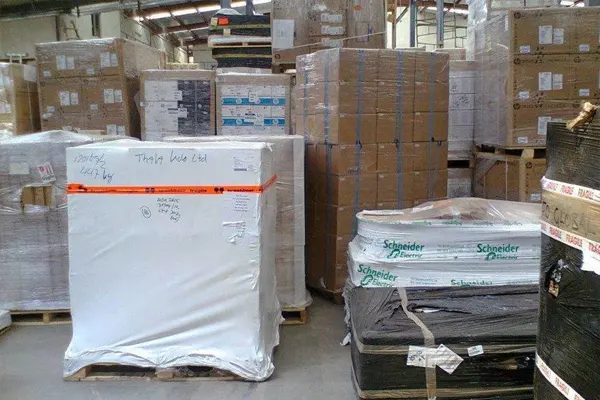
Step 3 — Cargo Received and Stuffed at the Klang Warehouse
Cargo is received, re-measured against the booking and stuffed. A re-measure that differs from the declared dimensions is the most common cause of a revised LCL invoice.
Step 4 — K1 Declaration
The export declaration is filed through uCustoms in-house, with supporting documents checked before submission.
Step 5 — Bill of Lading and Departure
Documentation is issued once the container is manifested and the vessel confirmed.
5. LCL Mistakes That Cost Money at Port Klang
Declaring Volume Instead of Measuring It
Estimated dimensions get corrected at the CFS and the invoice moves with them. Measure palletised cargo including the pallet.
Comparing Ocean Freight Only
An LCL quote that looks far cheaper than FCL often is not, once CFS handling, documentation and destination charges are added.
Ignoring the Consolidation’s Weakest Shipment
Your cargo shares a container and a customs process with other shippers. One problem consignment can delay the container.
Leaving the Declaration to the Last Day
Corrections to a declaration or to the description on the Bill of Lading take time that a cut-off does not allow for.
Frequently Asked Questions
What is the minimum for LCL shipping from Port Klang?
TNS Log accepts LCL bookings from 1 CBM, for B2B shipments.
How is LCL priced?
On whichever is greater — cubic metres or tonnes (the weight-or-measure basis) — plus CFS handling, documentation and destination charges. Always compare full landed cost against FCL.
At what volume should I switch from LCL to FCL?
Around 13–15 CBM out of Port Klang. Below that LCL is normally cheaper; above it a 20-foot FCL is usually more cost-effective once CFS handling is counted, and it is faster.
Does TNS Log handle the customs declaration for LCL cargo?
Yes. TNS Log is a licensed customs agent and files the K1 export declaration in-house through uCustoms, coordinating RMCD inspection directly.
Where is the cargo consolidated?
At TNS Log’s own warehouse in Klang, minutes from Westport and Northport.
Can LCL be shipped from Penang or Pasir Gudang instead?
TNS Log books with carriers calling Port Klang, Pasir Gudang and Tanjung Pelepas. For northern-region cargo, Penang Port can save enough inland trucking to be the better choice.